
Produced for Hamilton education organization Advanced Gerontological Education, this series of 8 videos focusses on gentle and persuasive techniques for healthcare providers to employ when working with people with dementia and Alzheimer’s. Designed to flow seamlessly into the AGE curriculum.

AGE Inc. Gentle Persuasive Approaches Videos
Produced for Advanced Gerontological Education, this series of eight videos teaches healthcare providers gentle, persuasive techniques for working with people living with dementia and Alzheimer’s, designed to flow seamlessly into the AGE curriculum.
Client
AGE Inc.
Industry
Healthcare, Education
Type
Training
Platform
Web & Social Media
Audience
Tutorial Videos | Gentle Persuasive Approaches in Dementia Care | Client: AGE Inc. Transcript
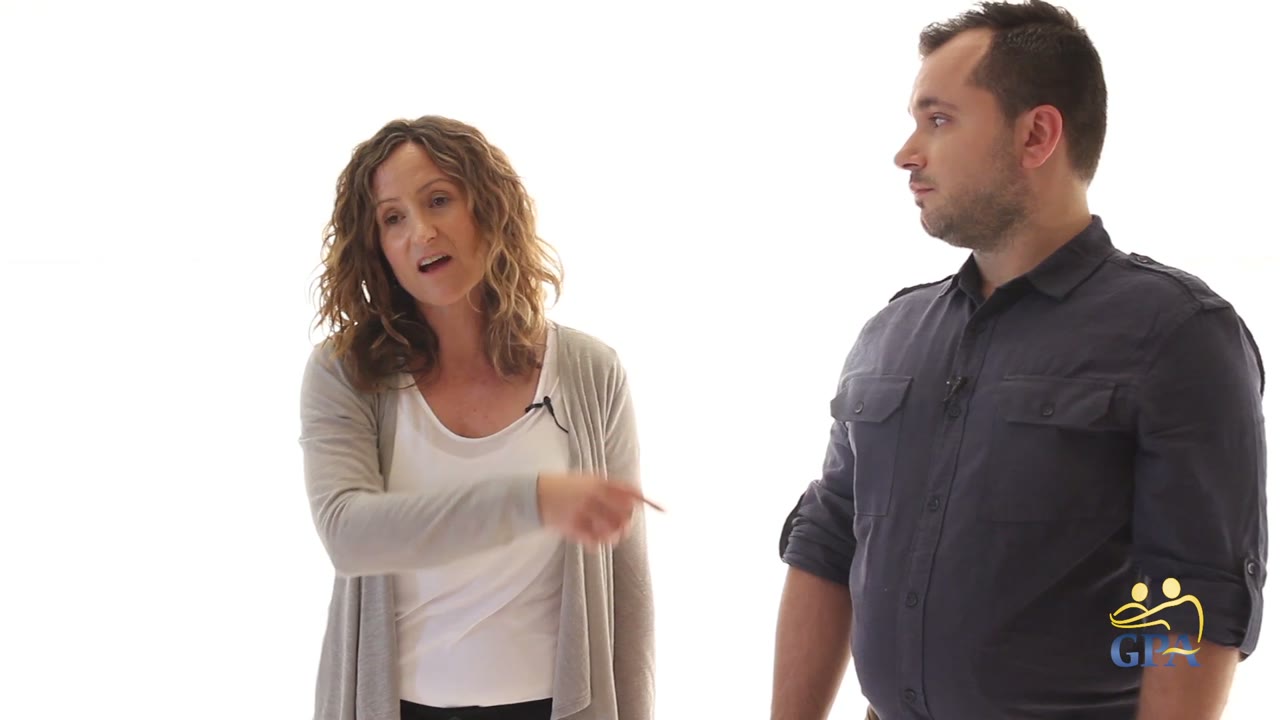
In some instances, you may need to redirect a person from a situation of risk or move them to a safer area. As with any approach, ensure you are using respectful communication. Say the person's name, let them know who you are, and use validation. Using the individual gentle redirection technique, you will be approaching from the side.
Use your outside arm to grasp the wrist of the person's hand closest to you. Since I'm approaching Mario from the right, I'm going to use my right hand and place it onto his right wrist. Likewise, if I were approaching him from the left hand side, I would use my left hand onto his left wrist. When grasping the person's wrist, ensure that your palm is face down and that your fingers and thumb are encircling their wrist completely.
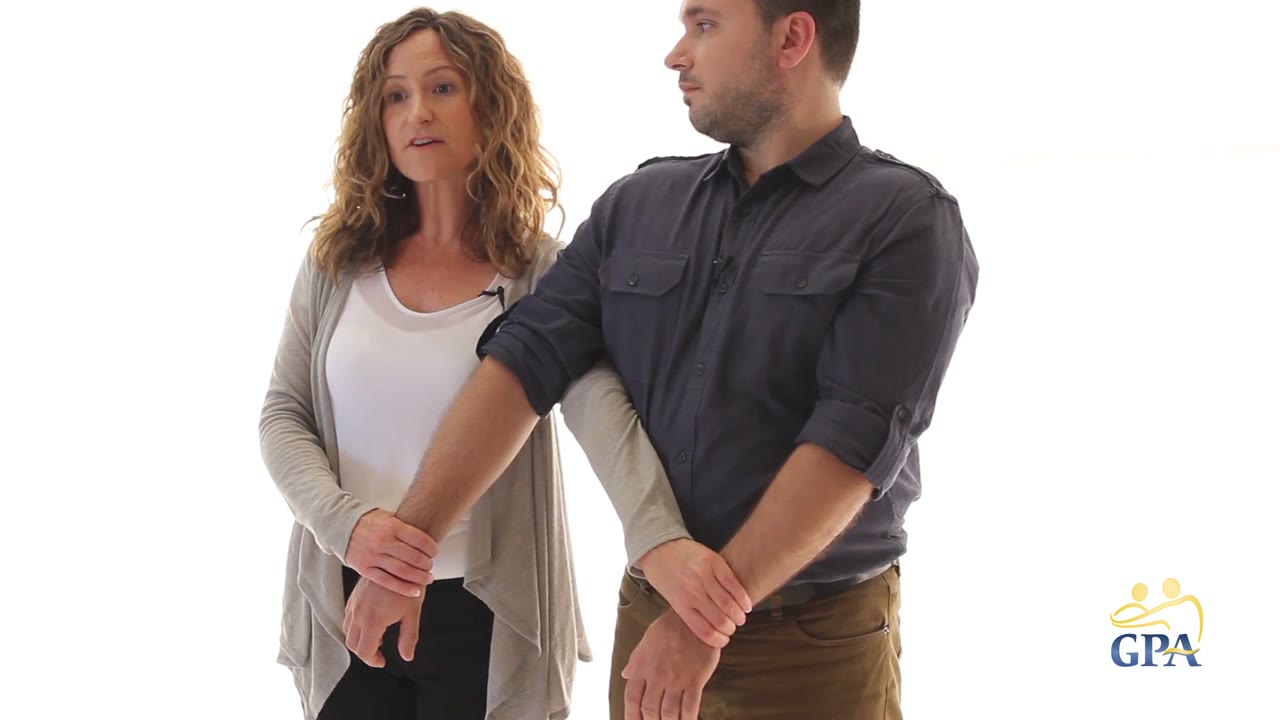
Moving their arm in a downward and outward motion, move your free arm underneath their armpit. This creates an anchor or a lever effect. Prepare to react with your inside arm should the person respond with their free hand by trying to strike you. If their hand comes within reach, use your free hand to grasp their wrist.
Apply your hand in the same palm down position with your fingers and thumbs encircling their wrist. Gently hold the person's arms outward and downward toward your body with your hip tucked in slightly behind and to the side. Be mindful of the person's mood and their cues to their behavior to avoid further strikes or elbows to your head or chest.
In this position, it is easier to redirect the person to a safe place. At any time, you can change this to the stroll technique by releasing their arm furthest from you and placing your free hand on your own wrist. You can use the stroll technique to walk with the person and continue to help them to de-escalate. Be mindful of further potential risks and adjust your plan accordingly. Mario, you seem upset. I am. Would you like to go down to the lounge and we can talk? That sounds lovely. I am.
About this project
Over the past 10 years, Double Barrel has worked with us on a variety of video projects (large and small) to heighten brand visibility and expand our reach nationally in the healthcare sector. The results have been superb — they were quick to grasp our mission and vision and run with it creatively. They are particularly respectful and accommodating of tight deadlines. As a not-for-profit, budgets are a crucial consideration for AGE. Double Barrel has helped us achieve high-quality, memorable and effective video storytelling while staying within budget. We highly recommend their services.
Patricia Boucher
Executive Director, AGE Inc.
Tutorial Videos | Gentle Persuasive Approaches in Dementia Care | Client: AGE Inc. Transcript
In some instances, you may need to redirect a person from a situation of risk or move them to a safer area. As with any approach, ensure you are using respectful communication. Say the person's name, let them know who you are, and use validation. Using the individual gentle redirection technique, you will be approaching from the side.
Use your outside arm to grasp the wrist of the person's hand closest to you. Since I'm approaching Mario from the right, I'm going to use my right hand and place it onto his right wrist. Likewise, if I were approaching him from the left hand side, I would use my left hand onto his left wrist. When grasping the person's wrist, ensure that your palm is face down and that your fingers and thumb are encircling their wrist completely.
Moving their arm in a downward and outward motion, move your free arm underneath their armpit. This creates an anchor or a lever effect. Prepare to react with your inside arm should the person respond with their free hand by trying to strike you. If their hand comes within reach, use your free hand to grasp their wrist.
Apply your hand in the same palm down position with your fingers and thumbs encircling their wrist. Gently hold the person's arms outward and downward toward your body with your hip tucked in slightly behind and to the side. Be mindful of the person's mood and their cues to their behavior to avoid further strikes or elbows to your head or chest.
In this position, it is easier to redirect the person to a safe place. At any time, you can change this to the stroll technique by releasing their arm furthest from you and placing your free hand on your own wrist. You can use the stroll technique to walk with the person and continue to help them to de-escalate. Be mindful of further potential risks and adjust your plan accordingly. Mario, you seem upset. I am. Would you like to go down to the lounge and we can talk? That sounds lovely. I am.
Explore our Work


