

Drones For Good

This series of short documentaries, filmed from Quebec City to Vancouver Island, highlights the innovative use of drone technology by leading experts in the field. Through a blend of remote interviews and on-location filming, we’ve captured compelling stories that showcase the potential of aerial technology.


Client

Transport Canada

Industry

Education, Public Sector

Type

Documentary

Platform

Web & Social Media

Audience

Canadians, general public, drone operators

About this project

Our recent collaboration with Transport Canada features experts from Quebec City to Vancouver Island, who are at the forefront of advancing drone technology for social good. Despite the geographical distances, we conducted interviews via Zoom from Ontario while our dedicated camera crews on location captured the essence of each story, providing seamless support and creating a perfect synergy between technology and storytelling. Just like our subjects!

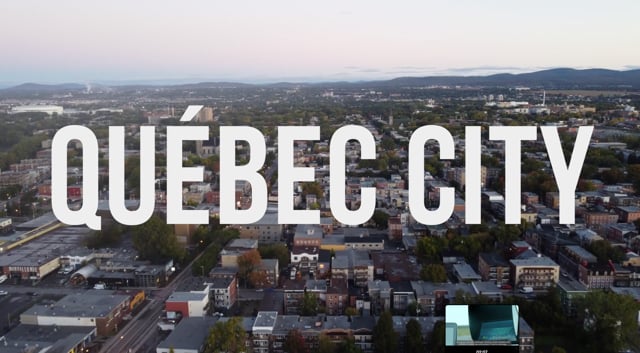
This project features insights from pioneers like Maude Pelletier of MVT Geosolutions (Quebec), in Quebec, Wade Hawkins of the Southern Alberta Institute of Technology (Alberta), in Alberta, Professor David Bird, and Tim Stinson from Stinson Aerial (Vancouver Island), both based on Vancouver Island. Each documentary showcases the innovative uses of drones in their respective fields, highlighting the impact of aerial technology on our world.

We are immensely proud of what we’ve achieved with “Drones For Good” and are grateful to Transport Canada for the opportunity to showcase these groundbreaking stories. This project exemplifies our commitment to excellence and our ability to bring compelling narratives to life, no matter the location.
Drones For Good – Transport Canada – Dr. David Bird Transcript

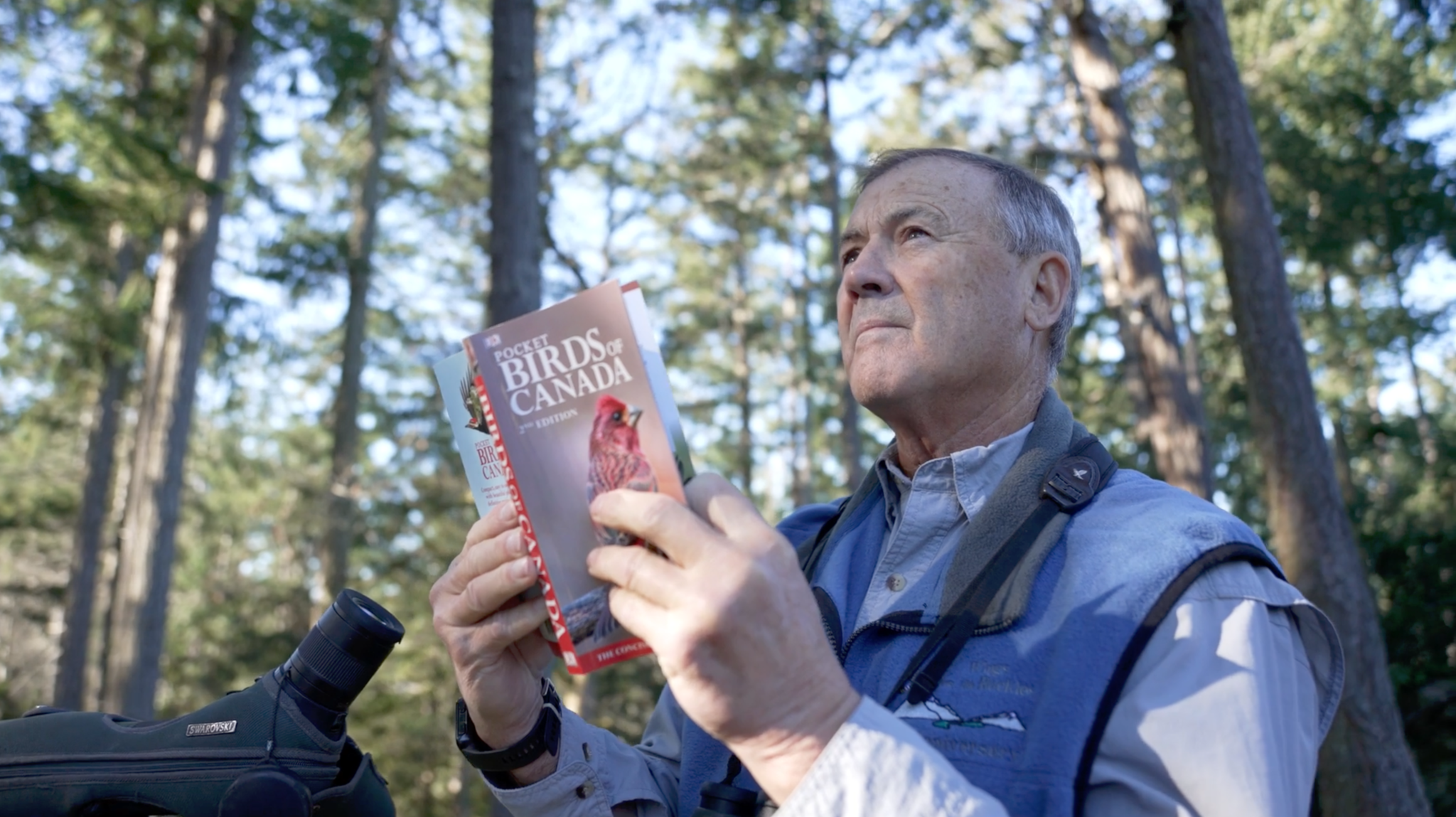
Birds of prayer at the top of the food chain, so they're very susceptible to chemical pesticides habitat degradation and loss and so we're trying to do our best to keep them from disappearing. I'm David Byrd and Emeritus professor of wildlife biology at McGill University. More than a decade ago. I discovered the world of drones and how they can be used to study wildlife.

To get a count of eggs or young in the nest one would either have to fly or climb the nest which is certainly not very safe. The idea of a drone is is that you could launch the Drone from even as far away as a quarter of a mile flight over the nest and take your pictures get counts of eggs or young and then leave and you could do that within the space of about three minutes. So a lot less stress to the birds themselves and a lot less stress to the biologist and of course a lot safer and cheaper, too.

Health and safety of the wildlife comes first. This is not something that one should do alone. It's important to make sure that you've got a spotter or two having a good method for communicating as well as having in place a plan or an exit strategy to make sure that if the bird does something unexpected attacks the Drone for example that you can get the Drone safely to the ground and out of Harm's Way for the bird. it's important for the public to understand that regulations are in place to use drones properly and in certain places like National and provincial parks because they can also be potentially disturbing and even harmful physically to wildlife of various kinds and so people using drones should be cognizant of the proper safety protocols and regulations to ensure their safe use You know, I studied birds of pray for all my research life, but I never dreamed that I would discover a new technology.

Whereby I am a Pioneer among some of the top Wildlife biologists in the world. I'm very very proud of what I've accomplished so far in the world of drones and I have no intention whatsoever of stopping I have many many more ideas in my mind of things. I'd like to pursue if drones are used properly and safely then they can become an amazing tool to study wildlife.

Drones for Good – Transport Canada – Stinson Aerial Transcript

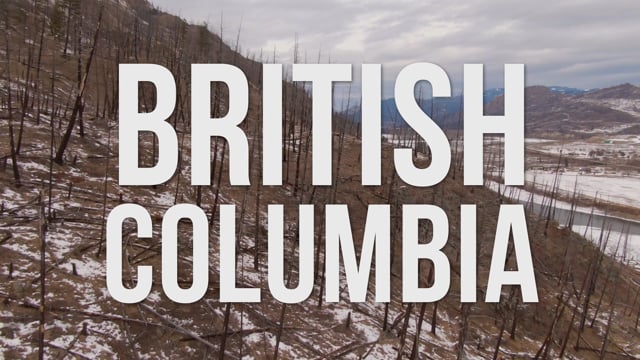
2021 was in my mind probably one of the worst seasons that we've seen the forest in general is much drier than it has been and the speed that these fires move is fast. Something's changing here in terms of climate and the Drone technology is going to be a major player to try to minimize the damage that's done by these fires every year. My name is Tim Stinson.

I'm operations manager for Stinson aerial Services here in British Columbia. So BC wildfires using drones to identify hot spots for the ground Crews or the Air Cruise the following day. What we're trying to do. There is remove some of the instances where we're Pilots are put into tough positions. Some of the biggest risks for helicopters might be power lines when they're hazed by smoke.

So if a drone can be put in that situation and put Pilots where they're better suited and they're gonna return home at night. So a big part of what we do in wildfires is flying our drones Beyond visual line of sight. We have to submit an operational risk assessment in order to qualify for a special flight operation certificate.

You have to be an accomplished drone Pilots. You have to know the ins and outs of your system. You have to have a lot of trust and faith in your team that you're going to work together, especially in a situation like a wildfire or it's pretty high stakes. It's exciting but it's also nerve-wracking because there's so many things that can be safety hazards.

The risk involved in this type of flying I think is high putting a drone into the wrong spot just increases that potential for something to go wrong. And the last thing that a pilot in an aircraft or helicopter sinking about is the Drone hitting its window. It's really important that people that fly drones understand that it's better that we just keep our personal drones in our pockets during those events.

It's a great feeling to use technology for good. The Drone itself can ensure the safety of evacuees or people who are in the path of wildfire. It can help ensure the safety of wildland firefighter Crews if we can start to utilize these types of systems to be able to move things while we're on the fire lines. I think we'll see some huge advantages over time.

In BC alone. We Face some of the toughest terrain some of the most interesting weather and lots of challenges that if we can overcome these pieces, we'll be able to apply this to many other jurisdictions across Canada.

Drones For Good – Transport Canada – Maude Pelletier Transcript

Gemskashfee a Gemma multiversary only doesn't sector complete man in a bank here that I should Point let technology monoi mopedia selected down. They found that feels that are not replaced and the teacher see not the priest is a specialist on a kiss on the initial spacial particle me again monster Donald. Kashikama semi company invitationals to search that sounds like a melara two month pound 64 they on South analysis.

He gave kids to take care of your shows that hair tricky. Sunday band quests were sanity bankratekar confetti shows that they could not pick on analyst Grandma totally a risk factor others correctama or red zv larious Co minimum a lip protocol the security some cares and portal respected. And so thank you our Taco paratar attack a company that response did wrong capably shame that this is all the security pool is Operation Center countries Securus two numbers.

Don't fit automatic matter. This is Circus ciri of industrialization because I plot, Elizabeth, Arizona. I'll say extra money against Transport Canada are Amy setar regular matar. He had two Las Opera Target tulip company the respect to the body particle the security pocket to destroye the sound a security. Shouldn't personally wrong. I like the leader doesn't mean you total man Nouveau service on Route difficult. Schema must be very Don't care Judy but parama Alexis.

Drones For Good – Transport Canada – Wade Hawkins Transcript

It's great to be challenged in your day-to-day job. I have always been interested in data and geographic information systems and then fusing that with drone technology and the ability to leverage these incredible machines to support Humanity. I think is an incredible thing. My name is Wade Hawkins. I'm a principal researcher at the Southern Alberta Institute of Technologies Center for Innovation and research and unmanned systems.

Here at Cirrus. We're currently working with stonian Dakota Nation remote indigenous communities west of Calgary on a project to utilize drones for the delivery of medical equipment and medicine so they can receive health care and supplies that much faster. Access to healthcare supplies primarily can be challenging especially in a situation where there may be an elder that may be closed off because of winter road conditions.

We can send medication like insulin medical devices like ultrasounds to that Community location and provide them with that type of delivery service. So it's really breaking down the barriers. One of the key goals of this project is to be able to generate Beyond visual line of sites certification and inflates to support the project.

The pilot no longer sees the Drone and doesn't see what's around the drones. You need to be able to communicate within your team. You need to know everything about the Drone and the airspace and you need to be able to react very very quickly. We're working very collaboratively with Transport Canada to ensure that we have all the proper documentation in place.

Plus we're also integrating detect and avoid systems and Universal Traffic Management Systems. It's a more stressful flight for sure. But if we can. Successfully go beyond visual on a site then we have the ability to impact many more lives and many more areas from a drone standpoint. I think the future is incredibly bright.

It's an incredible industry to be part of we like to feel that the work that we're doing at Sears to push PV loss forward is hopefully going to support other groups needing to do something similar. We can go beyond visual line of sight to support remote communities and provide them with medical resources that that's a big win and I think I think that's that's worth the challenge that we're encountering.

Explore our Work