
The first in a series of original stories about the fantastic research work taking place in McMaster Engineering labs! This piece focusses on the work of PhD student Sana Jahanshahi, and her development of a novel tablet that tests water quality, instantly.

Student Research Story
The first in a series of original stories from McMaster Engineering’s labs, this piece follows PhD student Sana Jahanshahi and her development of a novel tablet that tests water quality instantly.
Client
McMaster University
Industry
Education
Type
Documentary
Platform
Web & Social Media
Audience
ENGINEERED ~ Episode One Transcript
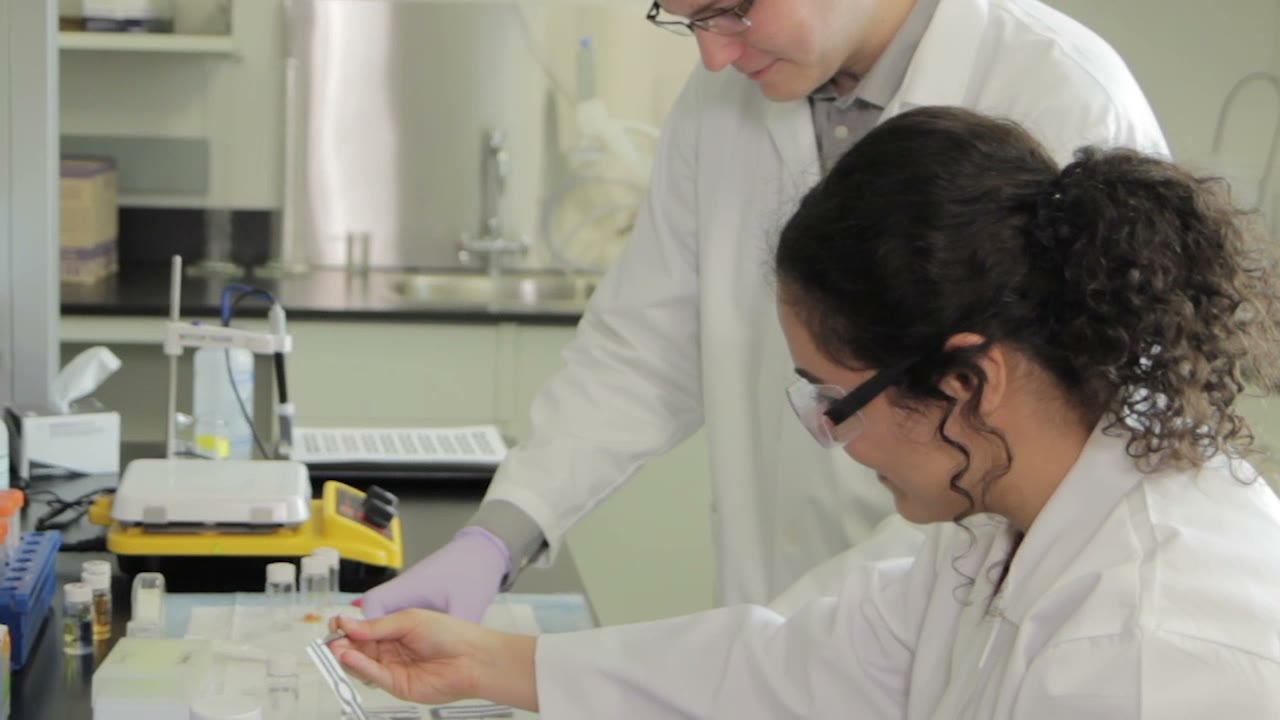
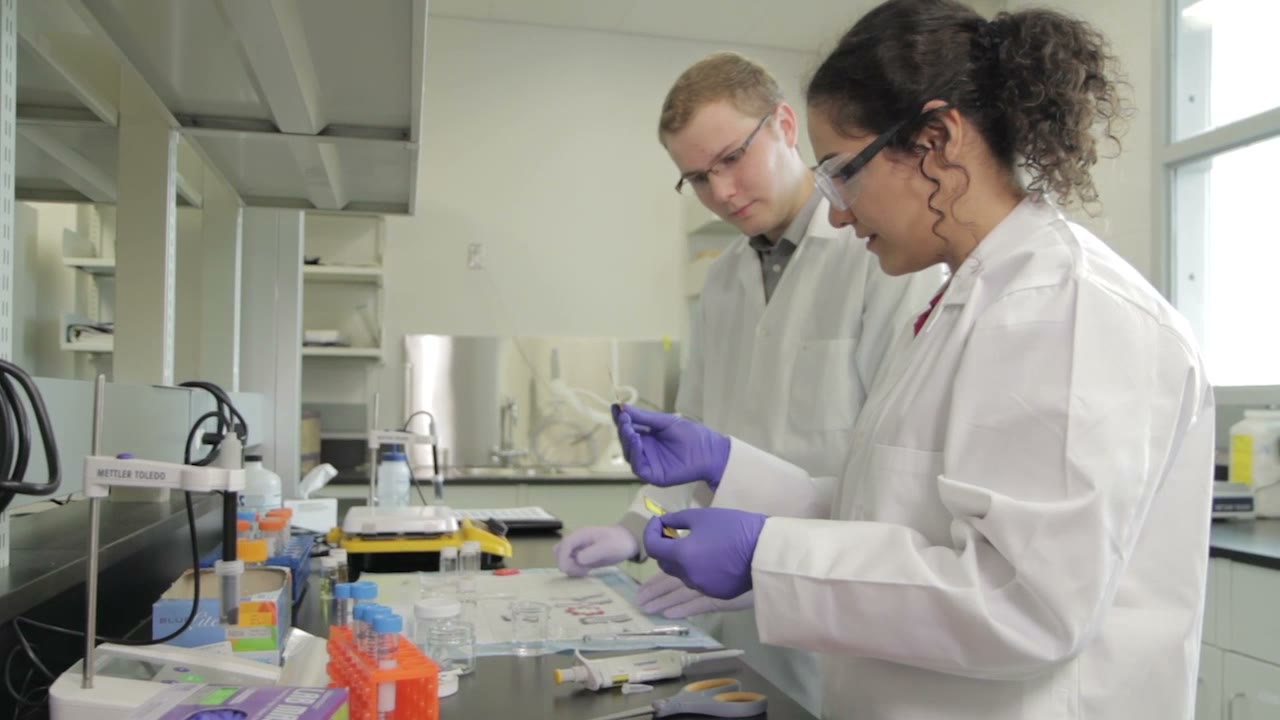
Episode One: Water security. That small turn of phrase is something most of us don't have to think about on a daily basis. But for an estimated 780 million people around the globe, access to clean and safe drinking water is a challenge faced daily. At McMaster University, tucked away in a well-lit corner of a chemical engineering lab, Professor Carlos Felipe and his team of Ph.D. and undergrad students are working on a solution to this pressing global challenge.
One of the issues in our work is the issue of water quality and not every person in the world has access to clean and safe water. Every single year, more than 70,000 people are dying in India because of pesticide poisoning. Even in developed countries, long-term exposure to pesticide are going to affect neurological systems.
So early diagnostic is very critical. Many people have no choice but to drink the only water they have access to, even if it's contaminated. Water testing is costly and time consuming. Samples must be taken in the field, then sent to a lab where water testing enzymes are kept at a constant temperature of minus 80 degrees Celsius.
Carlos and Sana needed a way to keep these enzymes stable without refrigeration, if they were going to reach their goal of making water testing available to anyone, instantly, anywhere. And that's when Sana made the team's big discovery. The idea was pretty simple. I was looking for water-solubleable film. I started to search supermarkets looking for sugar-based film that can dissolve fast.
And I happened to find breath-thrushing the strip, so I got the main ingredient to the lab and made the recipe over and over to guide what exactly I was looking for. Sana figured out that the water testing enzymes stay active in the sugary breath strip film, which means no refrigeration. These water testing enzymes, packaged up in Sana's sugary pill form, can be used on location anywhere in the world.
Researchers dissolve this pill into a sample of water. Ten minutes later, the level of contamination is revealed by the sample's final color, results on-site instantly. From there, photos are taken with a smartphone app, and a picture of the resulting test is GPS-tagged, which means a living global database of water quality results.
This is a huge breakthrough. From its humble origins in a McMaster lab, the next steps for Carlos and Sana's big invention is field testing, starting in India in 2015. I chose to come to McMaster because the most important criteria was about having a chance to work with a good research group. The role of the professor is to provide a goal, a vision, something to work for.
I think we all want to make the world a better place. My education has allowed me to do that, to make a difference in one of the biggest challenges on the planet. At McMaster, the future is engineered. you
About this project
Thank you for your tremendous work on this project. The videos both turned out amazing. It was an enjoyable experience from beginning to end. A big thanks to you and all of your team for the outstanding work.
Susan Emigh
Director, Public Relations, McMaster Faculty of Health Sciences
ENGINEERED ~ Episode One Transcript
Episode One: Water security. That small turn of phrase is something most of us don't have to think about on a daily basis. But for an estimated 780 million people around the globe, access to clean and safe drinking water is a challenge faced daily. At McMaster University, tucked away in a well-lit corner of a chemical engineering lab, Professor Carlos Felipe and his team of Ph.D. and undergrad students are working on a solution to this pressing global challenge.
One of the issues in our work is the issue of water quality and not every person in the world has access to clean and safe water. Every single year, more than 70,000 people are dying in India because of pesticide poisoning. Even in developed countries, long-term exposure to pesticide are going to affect neurological systems.
So early diagnostic is very critical. Many people have no choice but to drink the only water they have access to, even if it's contaminated. Water testing is costly and time consuming. Samples must be taken in the field, then sent to a lab where water testing enzymes are kept at a constant temperature of minus 80 degrees Celsius.
Carlos and Sana needed a way to keep these enzymes stable without refrigeration, if they were going to reach their goal of making water testing available to anyone, instantly, anywhere. And that's when Sana made the team's big discovery. The idea was pretty simple. I was looking for water-solubleable film. I started to search supermarkets looking for sugar-based film that can dissolve fast.
And I happened to find breath-thrushing the strip, so I got the main ingredient to the lab and made the recipe over and over to guide what exactly I was looking for. Sana figured out that the water testing enzymes stay active in the sugary breath strip film, which means no refrigeration. These water testing enzymes, packaged up in Sana's sugary pill form, can be used on location anywhere in the world.
Researchers dissolve this pill into a sample of water. Ten minutes later, the level of contamination is revealed by the sample's final color, results on-site instantly. From there, photos are taken with a smartphone app, and a picture of the resulting test is GPS-tagged, which means a living global database of water quality results.
This is a huge breakthrough. From its humble origins in a McMaster lab, the next steps for Carlos and Sana's big invention is field testing, starting in India in 2015. I chose to come to McMaster because the most important criteria was about having a chance to work with a good research group. The role of the professor is to provide a goal, a vision, something to work for.
I think we all want to make the world a better place. My education has allowed me to do that, to make a difference in one of the biggest challenges on the planet. At McMaster, the future is engineered. you
Explore our Work


