


As we monitor our business performance, two areas where you can have the biggest positive impact are sales and margin. Let's review some key performance indicators, or KPIs. Sales per day represents the average daily sales for a given month. It is calculated by taking the total sales for a month and dividing it by the number of working days in the month.
Growth percentage represents the year-over-year change in sales. Organic growth percentage is the internal growth rate or growth from existing businesses, excluding acquisitions. This metric normalizes for changes in sales days year-over-year. Sales per employee is the total amount of sales divided by the total number of FTEs.
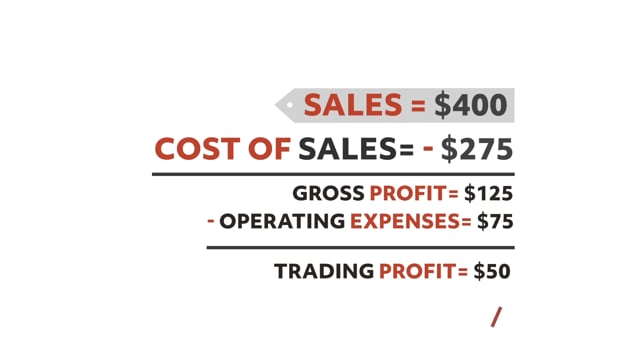
Now let's turn our attention to margin, what it is and how it's calculated. Gross profit is the total amount of sales minus the cost of sales. And gross margin is gross profit divided by the amount of sales. To calculate our gross margin, we need to start by determining gross profit. Let's look at an example. Hero sells a product for a dollar.
That product costs 75 cents to procure, so his gross profit is 25 cents. If Hero takes that 25 cents profit and divides it by 100, that leaves him with 25% gross margin. At Woolsey, we watch our gross margin closely. There's another metric that is equally important to manage, and that is system margin. Simply put, system margin is the difference between what we sell an item for and what we buy an item for.
Let's look at an example. Bob makes a sale of $100. Product costs were $75, so his system margin is $25. Bob's gross margin for the same sale includes the system margin of $25 that he made, as well as a number of other components, such as inventory adjustments, gross profit adjustments, rebates, and inbound delivery. Let's look at these in more detail.
An inventory adjustment is a change to the general quantity. For example, Jane is about to sell a copper fitting to a customer. While our inventory says there are two in stock, when she checks the shelf, she only finds one. Jane would then do an adjustment to correct this discrepancy. Gross profit adjustments include branch-level transactions that have an impact on gross profit.
Each of these has the potential to negatively impact the gross margin at your branch. Rebates represent the amount of money we get back from vendors for the purchase of specific products. With inbound delivery charges, there are two expenses you can help control: Fright Actual, included in this expense are invoices received from our freight carriers for product delivered to our Woolsey branches, and Interbranch Fright.
This expense represents the freight we are charged by carriers for deliveries between Woolsey branches. The receiving branch is responsible for paying this freight bill. In cases where there is a dedicated shipment from the RDC, the RDC pays the freight. With all of these factors in mind, let's return to our original example.
Bob made a sale of $100. The product costs were $75, so his system margin is $25, and his system margin percentage is 25%. Bob's gross margin for the same sale includes the system margin of $25, plus the following: Inventory adjustments, gross profit adjustments, rebates, and inbound delivery. When added together, our total gross margin is $30.
So how can you positively manage your sales margin? Let's take a look at how Yen does it. Yen is the manager of a top-performing branch at Woolsey. Yen realizes that even the smallest of adjustments have the potential to make a large impact on gross margins. Yen works hard to be accurate with her counts, and always reports any adjustments in a timely manner.
She manages her inventory effectively by bringing in products her customers want, so that there's a lower likelihood of a product becoming obsolete or scrapped. If she does have an obsolete product, Yen tries to sell it wherever possible. She always charges a restocking fee for customer returns, especially on non-list items, and works to sell products that come with higher vendor rebates.
She also ensures she never overrides pricing. To recap, there are a multitude of ways to positively impact our gross margins at Woolsey. A few to take away: control inventory, charge right, sell higher rebate products, don't override pricing, and sell obsolete and own brand stock. With your help, we will increase our gross margins and achieve focused, profitable growth at Woolsey.